


Vol. XXVI, No. 5, May 2026
Are AI chatbots finding and recommending your LBE?
People are increasingly asking AI assistants what to do tonight instead of typing questions into search engines, and that shift is quietly reshaping how out-of-home experiences are discovered. Location-based entertainment (LBE) venues now need to be the obvious, trustworthy choice that an AI agent recommends and builds a whole outing around for families with kids, friend groups, dates, and work teams alike.
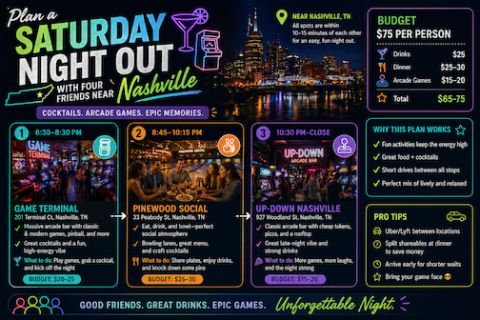
AI is changing how people search for things to do. More people are using tools like chat-based AI and voice assistants as their first stop for ideas on where to go. Surveys in 2025 showed that at least one-third of young adults were already using AI tools in some way to plan leisure activities or build a trip itinerary, and that percentage has definitely increased since then. Using AI, they ask questions like, “Plan a Saturday night out with four friends near Nashville, with cocktails, arcade games, and a budget of $75 per person,” or “Find a rainy-day place where I can take my 6-year-old and 9-year-old for a couple of hours on Tuesday afternoon near Denver.” Instead of browsing pages of links, they want one clear answer on where to go, when to go, and what to do there.
In this new search method, the results page is inside the AI itself. The AI assistant quietly checks maps, reviews, websites, social posts, and articles in the background, then delivers a short, opinionated list, often just one or two options, without the user ever seeing most of the sites it consulted. For LBEs, that's a huge change. If you are not on the assistant's internal short list, many guests may never even know your venue exists, even if you have a decent website.
AI needs clear signals to determine which places to recommend. When someone asks for “a fun bar‑arcade with good food” or “an indoor play center that's great for a 5‑year‑old's birthday,” the assistant looks for venues that are easy to understand, widely discussed, and safe to recommend.
AI tends to favor venues that:
- Are clearly described online - what you are (arcade bar, social bowling, immersive game bar, family entertainment center), who you serve (families, adults, teens, mixed groups), what you offer (games, shows, attractions, food, drinks), where you are, and when you're open.
- Have strong, recent reviews that sound like real experiences, not generic praise.
- Show up in trusted sources such as local publications, nightlife guides, parent blogs, and community calendars.
- Make it easy to see prices, packages, rules, and booking options without a lot of digging.
From the AI's perspective, recommending a venue is like putting its reputation on the line. It will favor places that appear reliable and well-documented, which are safer bets for a family afternoon, a date night, or a group outing, rather than vague, confusing listings with little information.
A traditional website isn't enough anymore. This doesn't mean your website no longer matters. It's still your ‘home base,' but many guests won't find you on a traditional search results page. Increasingly, they'll first encounter your brand in a short description within an AI answer, with your site linked as the place to learn more or book a reservation.
Your content and reputation now have to do double duty. They must help visitors who land on your site decide, “Yes, this is our spot for tonight/this weekend,” and also feed the AI systems that determine which venues make the recommended list. The old game was to optimize for search results pages; the new game is to be easy for AI to understand, trust, and use to build a full plan.
You don't need to be highly tech-savvy to be found and recommended. Most of what AI needs from an LBE is clear, consistent information and visible proof that real people have great experiences there. Here are some detailed recommendations.
Describe your venue using everyday language your guests use.
- Adult‑oriented examples:
- Arcade-bar featuring craft cocktails and shareable plates.
- Duckpin social bowling with a late‑night kitchen and a DJ.
- Immersive game bar with trivia nights and a great beer list.
- Family‑oriented examples for an FEC:
- Indoor playground and trampoline park for kids.
- Family entertainment center featuring arcade, mini‑golf, and laser tag.
- Great birthday party venue for ages 5-12 with private party rooms.
Include your city or neighborhood name and occasions such as date night, after‑work drinks, teens' night out, rainy‑day play, kids' birthday party, or a team outing. This helps AI match you to specific intents, not just generic things to do.
Make your basics impossible to misunderstand. Keep your key facts consistent everywhere. For all LBEs.
- Use the same name, address, phone number, hours, and categories across Google, Apple Maps, Yelp, Instagram, Facebook, and major directories.
- Clearly list cover charges, price ranges, game pricing, age limits, dress codes, parking, and accessibility information.
- Specific for an FEC with children's activities:
- Spell out height/age rules (e.g., climbing wall for ages 6+, toddler zone for ages 0-4).
- Note stroller‑friendliness, family restrooms, and any sensory‑friendly times.
- State whether outside food is allowed and what's included in the party packages.
When that information is clean and consistent, AI doesn't have to guess who you are or whether you're a good fit for the query.
Turn your offers into simple building blocks. AI assistants effectively assemble outings from components. Make your offers easy to drop into a plan.
- Adultsocial game eatertainment examples:
- 2‑hour bowling lane package for up to 6 people, including a pitcher of beer and an appetizer platter.
- Game-bar bundle with 2 drink tickets and unlimited arcade play from 7-9 pm.
- FEC examples with kids' activities:
- 2‑hour birthday party package for up to 10 kids, including trampoline time, pizza, drinks, and a party host.
- Weekday play pass: unlimited access to the indoor playground and soft play area for ages 2-8.
- Family night special: 4 attraction passes, 1 large pizza, and soft drinks for a family of four.
The clearer and more specific these packages are, the easier it is for AI to present them as ready‑made options for adults and families.
Encourage guests to leave honest reviews that paint a clear picture.
- For adult visits:
Ask reviewers to mention who they came with (friends, co‑workers, partner), what they did (bowling, trivia, arcade, karaoke), what they ate and drank, and the vibe (lively, chill, loud, good for dates, great for big groups). - For family visits to an FEC:
Ask them to share children's ages, which attractions the kids liked most, whether the staff was helpful, and how easy it was to host a birthday or to navigate with younger kids.
These details tell AI what you're excellent at, such as being perfect for group celebrations, great at cocktails and games, or an awesome rainy-day option for kids, so it can match you with future guests with similar plans.
Get mentioned in trusted places beyond your own channels. Aim for mentions in local nightlife and food blogs, parent blogs, best-of lists, city guides, and event calendars. Every external article or feature serves as a vote of confidence and gives AI more material to draw from when selecting the best spots.
Make booking and contact effortless. Offer simple online booking or inquiry options for lanes, tables, party rooms, and large groups.
- Adult‑social examples:
- Online reservations for bowling lanes or darts
- Easy group inquiry forms for company outings or birthday groups.
- FEC examples:
- Online party booking with a date/time picker and package selection for kids' birthdays.
- Clear options for adding character visits, extra pizza, or extended playtime.
If guests can't book online, make it very clear how to reserve (call, email, or fill out a form), what information you need, and what to expect (response time, deposit, and cancellation policy). AI assistants are far more likely to recommend venues where they know guests will land on a clear next step rather than a dead end.
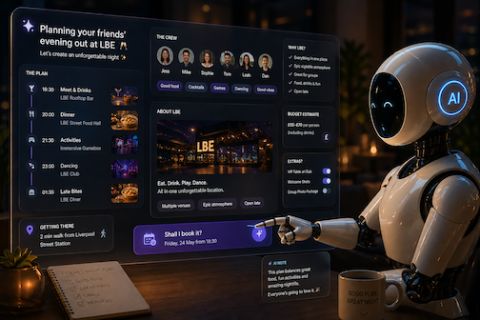
As AI assistants steadily replace traditional web searches for deciding where to go and what to do, the venues that thrive will be those that treat these systems like real guests. They will provide clear information, vivid stories, and easy ways to say yes. By speaking in natural language, tightening the basics wherever your business appears, turning your offers into simple building blocks, nurturing detailed reviews, earning mentions in trusted local media, and making booking effortless, you make it easy for an AI to choose you for both a Saturday night with friends and a Sunday afternoon with kids. In a world where more and more people just ask, “Plan this for me,” the winning LBEs/FECs will be the ones an assistant can confidently understand, recommend, and build an entire outing around without any extra scrolling.
Subscribe to monthly Leisure eNewsletter