


Vol. XXV, No. 13, December 2025
- Editor's corner
- The competitive challenge of immersive experience venues
- A missed opportunity for many location-based entertainment venues
- Netflix enters the location-based entertainment industry.
- Good interior design requires far more than architectural design
- The growing OOH market share for live sports
- Agritourism, significant competition for LBEs
The competitive challenge of immersive experience venues
Location-based immersive experience venues are transforming the U.S. entertainment landscape by turning leisure time into multi-sensory, story-driven adventures that blend technology, art, and guest interaction at every turn. Immersive experience venues are increasingly capturing market share from traditional entertainment venues in, driven by strong consumer demand for their interactive, narrative-driven, and social experiences. They have been expanding in scale and sophistication, offering more physically and digitally participatory concepts, often revolving around pop culture, art, and technology.
Unlike legacy location-based entertainment centers (LBEs) - bowling alleys, family fun centers, arcades, and other classic attractions which rely on standard games, rides, or passive entertainment - immersive experience venues create flexible environments with custom-built sets, high-density AV, projection mapping, and even AR/VR elements woven into modular layouts. Guests step directly into the action - solving mysteries, shaping stories, and co-creating their own memorable visits - instead of moving from machine to machine.
These modern venues are commonly called immersive experiences or immersive art experiences when more art-focused (collectively called “IE” in this article). They are a new category of location-based entertainment.
Large-scale permanent IEs are redefining the U.S. entertainment landscape in 2025. They are immersive, interactive, and hands-on, blending digital art, augmented reality, interactive challenges, culinary experiences, and non-linear storytelling, often with IP integration (see Netflix House article for a detailed description of an IP-focused one). Guests don't just observe; they become active participants, wandering through multi-sensory environments and engaging with narrative-driven experiences. They combine immersive art, narrative, and multi-sensory technology to create walkable worlds where visitors become part of the story. Unlike traditional museums or entertainment centers, these venues invite guests to freely explore surreal, themed spaces filled with hidden passages, tactile installations, responsive lighting and sound, and live or digital storytelling elements. The experiences are highly interactive - guests press buttons, play with objects, solve puzzles, and sometimes influence digital narratives. The design is typically multi-room and non-linear, encouraging curiosity and discovery rather than passive observation. Themed food/drink, smart wearables, and interactive retail round out the larger IE business models. The venues are designed to be social and “Instagrammable.” Each visit can be unique, shaped by choices and interactions within the ever-evolving environment.
Changing consumer expectations are driving the appeal of IEs. Their guests increasingly prioritize unique, social, Instagrammable experiences over classic games or fixed rides. Modular construction and design flexibility enable IE venues to rapidly reinvent guest spaces, blending live performance, digital storytelling, and hands-on art to provide something fresh for every visit to drive their repeat appeal. Vertical integration - with media companies launching their own experience destinations based on their IP, such as Netflix House - elevates content, engagement, and brand loyalty.
Most immersive experiences are designed to appeal broadly but emphasize attracting digitally engaged, culture-aware, and socially motivated consumers - people interested in adventure, art, innovation, and personal expression. The primary target market for immersive experience venues is younger adults (Millennials and Gen Z), urban professionals, families, and groups seeking social, creative, and memorable outings.
An immersive audience survey conducted in September/October 2024 by Gensler Research Institute found five aspects of immersive experiences were the clear favorites among survey respondents:
- A high level of interactivity
- The overall uniqueness of the experience
- Interacting with a purpose-built environment
- Encountering live actors
- Overall emotional impact
These aspects are likely table stakes for any quality immersive experience from the perspective of the audience when deciding what to attend and where to spend their money.
Meow Wolf started the trend of larger immersive and interactive experience venues in the U.S. with the opening of its flagship 33,000 sf “House of Eternal Return” in Santa Fe, New Mexico, in 2016. Meow Wolf began as an artist collective in 2008, experimenting with DIY immersive installations. Still, it was the permanent, large-scale, multi-sensory installation of “House of Eternal Return” that ignited the nationwide growth of this new venue type.
Meow Wolf's success inspired a nationwide proliferation of similar large-scale IEs in art, entertainment, and branded IP attractions, with the opening of over 350 permanent IE venues of all types and sizes, including experiential museums, interactive art galleries, branded spaces, and large-scale experience zones. At least 20 major new immersive venues are confirmed to open in 2026, including Netflix House (Las Vegas), Merlin Entertainments (Super Neon, Wondra), Cosm (Atlanta, Detroit), as well as several museum/gallery expansions. Many new venues are being planned at malls, sports/arena districts, and urban tourism zones, reflecting strong commercial real estate backing for these destination attractions.
Some larger IE venues like Meow Wolf in scale and experience are:
- Otherworld (Columbus, 32K sf & Philadelphia 42,000 sf) offers non-linear exploration, immersive art, hidden passageways, puzzles, and surreal, dreamlike worlds. They are among the closest in spirit and layout to Meow Wolf - blending hands-on interaction and narrative-driven experiences.
- Meow Wolf's Omega Mart in AREA 15 (Las Vegas, 52K sf) is a jaw-dropping, narrative “supermarket” adventure with secret portals and immersive storylines.
- Netflix House (Philadelphia, 100K sf): It brings Netflix IPs to life in a walkable, interactive, theatrical environment, combining themed dining, retail, and hands-on narrative play. (see article in this issue for a more detailed description).
- Superblue (Miami, 60K sf) While more focused on digital art and kinetic installations, Superblue's scale, multi-room format, and notion of exploration alongside creative technology make it similar to other IEs, especially for audiences seeking hands-on, story-infused environments.
- Sony Wonderverse (Chicago, 35K sf): This newly launched, IP-driven complex blurs the lines between immersive attraction, themed entertainment, and interactive storytelling, with zones inspired by films, games, and pop culture - very much in the Netflix House mold.
- Atlas9 (Kansas City, 46K sf): Purpose-built in 2025, Atlas9 mimics Meow Wolf's model - story-driven exploration, art environments, tech-driven puzzles, theatrical moments - making it a direct peer.
 Wonderverse |
 Superblue |
 Otherworld |
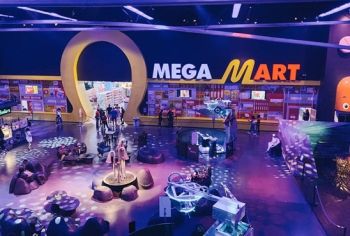 Meow Wolf Omega Mart |
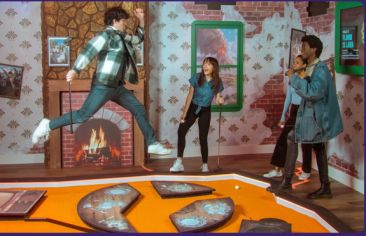 Netflix House |
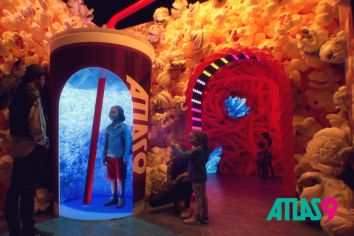 Atlas9 |
Overall attendance for the 350+ immersive venues of all types in the U.S. is estimated at 30 - 35 million visits for 2025. With major new venues already announced for 2026, annual attendance is forecast to reach 40 million or more in 2026.
Larger venues (e.g., Meow Wolf, Netflix House, Atlas9) report yearly attendance of 500,000-1.0 million visitors, while mid-sized and boutique immersive museums average 50,000 - 200,000 annual visitors. U.S. immersive entertainment venue revenues in 2024 were estimated at $3.9 billion, and the market is expected to grow at a 20 - 25% CAGR, mirroring visitor growth.
In 2025, the average ticket price for major permanent immersive experiences in the U.S. ranges from $32 to $55 for adult general admission. More elaborate venues such as Meow Wolf and Otherworld charge $40 - $55 for standard adult admission, with occasional premium experiences costing more. The average additional spend per visitor at large immersive venues in the U.S. in 2025 typically falls between $18 and $25, covering merchandise, food and beverage, upgrades, and experience add-ons. Average per capita revenue is estimated at $52 - $70 for top venues in 2025.
At the larger immersive experience venues - such as Meow Wolf's Convergence Station, Omega Mart, Netflix House, and Superblue - the average guest stay typically ranges from 90 minutes to 2.5 hours.
- Many visitors spend 1.5 to 2 hours exploring multi-room environments, interacting with exhibits, and engaging in narrative or puzzle elements.
- Venues hosting live performers, scheduled shows, or more elaborate quest-driven experiences (Meow Wolf, Netflix House) often see guests stay closer to 2 - 3 hours, especially on weekends and during special events.
Development costs per square foot for top U.S. permanent immersive venues generally range from about $400 to $700 depending on location, complexity, and technological integration. Renovated or repurposed buildings tend to be less costly per square foot than ground-up construction or hybrid mixed-use entertainment complexes. Large IP-driven IEs such as Meow Wolf cast $30-$60 million based on their size.
IE venues have a number of unique cost structures that distinguish them from traditional attractions, museums, or entertainment facilities:
- High Initial Investment in Custom Content and Technology
- Custom Narrative & Artistic Content: Original art, 3D visualizations, interactive software, and story-driven media are a significant capital expenditure. Producing high-quality, bespoke interactive content (video, AR/VR sequences, animations) can cost hundreds of thousands to millions per project.
- Hardware-Intensive Setup: Costs for projectors, LED walls, multi-channel audio arrays, sensors, RFID, custom-built sets, and interactive props drive initial and replacement capital budgets that are much higher than standard retail or gallery spaces.
- Frequent and Recurring Environment Updates
- Continuous Refresh Costs: Unlike static museums, immersive venues must regularly redesign or add exhibits and interactive features to keep audiences returning. This means budgeting for creative development and installation annually - often 10 - 20% of original Capex per year.
- Specialized Staffing and Operations
- Technical & Artistic Workforce: Skilled staff are needed for technology operation, troubleshooting, guest engagement, and ongoing maintenance. Many venues also employ artists and story producers on a project- or revolving-basis, increasing salary costs and training expenses.
- Performance and Actor Salaries: For venues using live actors or interactive performers (e.g., immersive theater), talent fees are a prominent, ongoing cost line item.
- Premium Maintenance and Support
- Equipment & Software Maintenance: Advanced technology requires ongoing support, swift part replacement, and, at times, proprietary vendor contracts for both hardware and software systems.
- Utilities: Technology-heavy venues can incur higher utility costs due to HVAC, lighting, and AV equipment that are always running.
- Licensing, IP Rights, and Legal Compliance
- For branded attractions, licensing media content/IP can incur substantial upfront and royalty payments not seen in most art or entertainment venues.
- Higher insurance and legal costs due to new kinds of guest experiences, safety audits, and accessibility retrofits.
- Higher Per-Visitor Experience Delivery Cost
- Each guest's experience may involve consumables, individualized tech support, or personalization; this increases the marginal cost of each visit relative to static attractions.
IE venues are a significant threat to traditional entertainment venues - such as arcades, bowling alleys, museums, and legacy family entertainment centers - due to:
- Changing Consumer Preferences: Millennials and Gen Z especially seek out venues that offer exploration, personal interaction, and shareable moments. IE venues respond by providing customized, narrative-driven environments - leaving classic venues, with static games or passive activities, at risk of feeling outdated.
- Repeat Visitation: IEs' programmable, ever-changing environments and seasonal content drive high repeat rates among local audiences. In contrast, traditional venues struggle to retain repeat customers unless they innovate.
- Social and Viral Potential: Immersive venues are designed for social sharing and “Instagrammable” appeal, fueling organic marketing and word-of-mouth.
- Flexible, Adaptive Design: New immersive venues quickly adapt and refresh their offerings in ways that bowling alleys, arcades, or legacy entertainment facilities find costly and disruptive. This agility gives IEs a strategic edge as entertainment trends evolve.
IEs deliver exactly what today's younger adult audiences value most: uniqueness, interactivity, and memorable social engagement.
The immersive experience sector's growth is a wake-up call for traditional entertainment and art venues, pushing all operators to rethink how they can stay relevant in a rapidly changing market. Traditional entertainment and art venues now face mounting pressure to modernize, add interactive features, or even rebrand if they hope to compete with IEs and their growing audiences and attendance.
Subscribe to monthly Leisure eNewsletter
Vol. XXV, No. 13, December 2025
- Editor's corner
- The competitive challenge of immersive experience venues
- A missed opportunity for many location-based entertainment venues
- Netflix enters the location-based entertainment industry.
- Good interior design requires far more than architectural design
- The growing OOH market share for live sports
- Agritourism, significant competition for LBEs