
This is a print-friendly version of www.whitehutchinson.com/news/lenews/2025/december/article102.shtml

[ Index of Previous eNewsletters (www.whitehutchinson.com/ news/ lenews/ previous.shtml) ]
Location-based immersive experience venues are transforming the U.S. entertainment landscape by turning leisure time into multi-sensory, story-driven adventures that blend technology, art, and guest interaction at every turn. Immersive experience venues are increasingly capturing market share from traditional entertainment venues in, driven by strong consumer demand for their interactive, narrative-driven, and social experiences. They have been expanding in scale and sophistication, offering more physically and digitally participatory concepts, often revolving around pop culture, art, and technology.
Unlike legacy location-based entertainment centers (LBEs) - bowling alleys, family fun centers, arcades, and other classic attractions which rely on standard games, rides, or passive entertainment - immersive experience venues create flexible environments with custom-built sets, high-density AV, projection mapping, and even AR/VR elements woven into modular layouts. Guests step directly into the action - solving mysteries, shaping stories, and co-creating their own memorable visits - instead of moving from machine to machine.
These modern venues are commonly called immersive experiences or immersive art experiences when more art-focused (collectively called “IE” in this article). They are a new category of location-based entertainment.
Large-scale permanent IEs are redefining the U.S. entertainment landscape in 2025. They are immersive, interactive, and hands-on, blending digital art, augmented reality, interactive challenges, culinary experiences, and non-linear storytelling, often with IP integration (see Netflix House article (www.whitehutchinson.com/ news/ lenews/ 2025/ december/ article104.shtml#article) for a detailed description of an IP-focused one). Guests don't just observe; they become active participants, wandering through multi-sensory environments and engaging with narrative-driven experiences. They combine immersive art, narrative, and multi-sensory technology to create walkable worlds where visitors become part of the story. Unlike traditional museums or entertainment centers, these venues invite guests to freely explore surreal, themed spaces filled with hidden passages, tactile installations, responsive lighting and sound, and live or digital storytelling elements. The experiences are highly interactive - guests press buttons, play with objects, solve puzzles, and sometimes influence digital narratives. The design is typically multi-room and non-linear, encouraging curiosity and discovery rather than passive observation. Themed food/drink, smart wearables, and interactive retail round out the larger IE business models. The venues are designed to be social and “Instagrammable.” Each visit can be unique, shaped by choices and interactions within the ever-evolving environment.
Changing consumer expectations are driving the appeal of IEs. Their guests increasingly prioritize unique, social, Instagrammable experiences over classic games or fixed rides. Modular construction and design flexibility enable IE venues to rapidly reinvent guest spaces, blending live performance, digital storytelling, and hands-on art to provide something fresh for every visit to drive their repeat appeal. Vertical integration - with media companies launching their own experience destinations based on their IP, such as Netflix House - elevates content, engagement, and brand loyalty.
Most immersive experiences are designed to appeal broadly but emphasize attracting digitally engaged, culture-aware, and socially motivated consumers - people interested in adventure, art, innovation, and personal expression. The primary target market for immersive experience venues is younger adults (Millennials and Gen Z), urban professionals, families, and groups seeking social, creative, and memorable outings.
An immersive audience survey conducted in September/October 2024 by Gensler Research Institute found five aspects of immersive experiences were the clear favorites among survey respondents:
These aspects are likely table stakes for any quality immersive experience from the perspective of the audience when deciding what to attend and where to spend their money.
Meow Wolf started the trend of larger immersive and interactive experience venues in the U.S. with the opening of its flagship 33,000 sf “House of Eternal Return (meowwolf.com/ visit/ santa-fe) ” in Santa Fe, New Mexico, in 2016. Meow Wolf began as an artist collective in 2008, experimenting with DIY immersive installations. Still, it was the permanent, large-scale, multi-sensory installation of “House of Eternal Return” that ignited the nationwide growth of this new venue type.
Meow Wolf's success inspired a nationwide proliferation of similar large-scale IEs in art, entertainment, and branded IP attractions, with the opening of over 350 permanent IE venues of all types and sizes, including experiential museums, interactive art galleries, branded spaces, and large-scale experience zones. At least 20 major new immersive venues are confirmed to open in 2026, including Netflix House (Las Vegas), Merlin Entertainments (Super Neon, Wondra), Cosm (Atlanta, Detroit), as well as several museum/gallery expansions. Many new venues are being planned at malls, sports/arena districts, and urban tourism zones, reflecting strong commercial real estate backing for these destination attractions.
Some larger IE venues like Meow Wolf in scale and experience are:
 Wonderverse |
 Superblue |
 Otherworld |
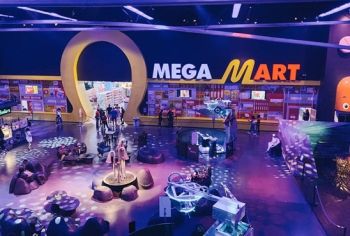 Meow Wolf Omega Mart |
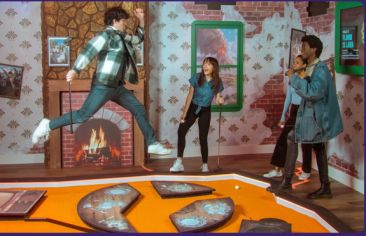 Netflix House |
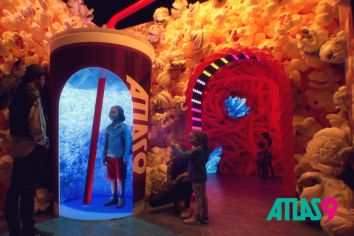 Atlas9 |
Overall attendance for the 350+ immersive venues of all types in the U.S. is estimated at 30 - 35 million visits for 2025. With major new venues already announced for 2026, annual attendance is forecast to reach 40 million or more in 2026.
Larger venues (e.g., Meow Wolf, Netflix House, Atlas9) report yearly attendance of 500,000-1.0 million visitors, while mid-sized and boutique immersive museums average 50,000 - 200,000 annual visitors. U.S. immersive entertainment venue revenues in 2024 were estimated at $3.9 billion, and the market is expected to grow at a 20 - 25% CAGR, mirroring visitor growth.
In 2025, the average ticket price for major permanent immersive experiences in the U.S. ranges from $32 to $55 for adult general admission. More elaborate venues such as Meow Wolf and Otherworld charge $40 - $55 for standard adult admission, with occasional premium experiences costing more. The average additional spend per visitor at large immersive venues in the U.S. in 2025 typically falls between $18 and $25, covering merchandise, food and beverage, upgrades, and experience add-ons. Average per capita revenue is estimated at $52 - $70 for top venues in 2025.
At the larger immersive experience venues - such as Meow Wolf's Convergence Station, Omega Mart, Netflix House, and Superblue - the average guest stay typically ranges from 90 minutes to 2.5 hours.
Development costs per square foot for top U.S. permanent immersive venues generally range from about $400 to $700 depending on location, complexity, and technological integration. Renovated or repurposed buildings tend to be less costly per square foot than ground-up construction or hybrid mixed-use entertainment complexes. Large IP-driven IEs such as Meow Wolf cast $30-$60 million based on their size.
IE venues have a number of unique cost structures that distinguish them from traditional attractions, museums, or entertainment facilities:
IE venues are a significant threat to traditional entertainment venues - such as arcades, bowling alleys, museums, and legacy family entertainment centers - due to:
IEs deliver exactly what today's younger adult audiences value most: uniqueness, interactivity, and memorable social engagement.
The immersive experience sector's growth is a wake-up call for traditional entertainment and art venues, pushing all operators to rethink how they can stay relevant in a rapidly changing market. Traditional entertainment and art venues now face mounting pressure to modernize, add interactive features, or even rebrand if they hope to compete with IEs and their growing audiences and attendance.
Subscribe to monthly Leisure eNewsletter (www.whitehutchinson.com/ subscribe/ lenews/ )
[ Index of Previous eNewsletters (www.whitehutchinson.com/ news/ lenews/ previous.shtml) ]
© 1999 - 2026, White Hutchinson Leisure & Learning Group, Inc.
The contents of this website and eNewsletters are protected by USA and international copyright law. Permission is granted to download and print single copites of any of the contents or articles for personal use. No other copies may be made. Educational institutions may obtain permission to make multiple copies for classroom use by e-mailing us with details. The contents of articles may be quoted provided credit is given to the "(author's name), White Hutchinson Leisure & Learning Group, Kansas City, MO, USA". All other rights for use or reproduction of the contents and articles are reserved.