


Vol. XXVI, No. 4, April 2026
- Editor's corner
- The IRL singles-events trend offers an opportunity for LBEs
- Popular beverage options at favorite restaurants
- Why are birthday parties declining?
- Using AI to generate LBE projections for roadkill
- Avoid dividing your guests by age or generation
- How the 'competitive socializing' LBE label is creating industry confusion
Avoid dividing your guests by age or generation
Segmenting by generation and age might seem logical, but it often doesn't lead to genuine experiences or offers. People within the same generation can have very different incomes, lifestyles, values, and restrictions, while those from different generations may behave similarly in some situations. Two Gen Z guests could act very differently. One might be a high-spending celebration organizer, while the other is a budget-conscious casual visitor who only attends during discounts. Similarly, a 26-year-old and a 50-year-old on a work outing might act quite alike. Grouping Millennials, Gen Z, or Gen X into a single category promotes stereotypes and marketing clichés rather than targeted strategies that truly enhance attendance, length-of-stay, and spending.
What works better is segmenting by occasion, behavior, and value. Occasion-based segments focus on why customers visit: date nights, after-work parties, birthdays, celebrations, tourist one-timers, or family daytime visits. Behavioral cues include how they book (walk-in versus planner), how long they stay, whether they add food and drinks, and their sensitivity to time limits or minimums. Value-based segmentation highlights high-lifetime-value regulars versus infrequent but high-spend group events, so you can prioritize capacity, service, and pricing accordingly.
Focusing on occasions, behaviors, and values helps you create targeted bundles (e.g., team-night packages, celebration tiers), adjust pricing by daypart, and design programming that aligns with actual usage patterns. This approach results in increased revenue, improved experiences, and significantly less wasted effort than relying on broad generational or age labels.
A good way to classify guests' experiences at entertainment and leisure venues is by:
- Purchase behavior: first-time visitors, repeat customers, frequent regulars, lapsed guests; full-price versus deal-driven.
- Engagement behaviors: digital participants (browse, save, share), planners versus spontaneous visitors, reviewers and advocates versus silent users.
- Occasion: family outing, date night, group celebration, solo relaxation, tourist.
- Benefits sought: social connection, challenge or gamification, food-focused experiences, learning or education, escape or immersion.
- Value tier: high-repeat lifetime value enthusiasts, price-sensitive experimenters, dormant but high-potential segments.
Each segment then gets customized offers, prices, and marketing based on their specific motivations and needs.
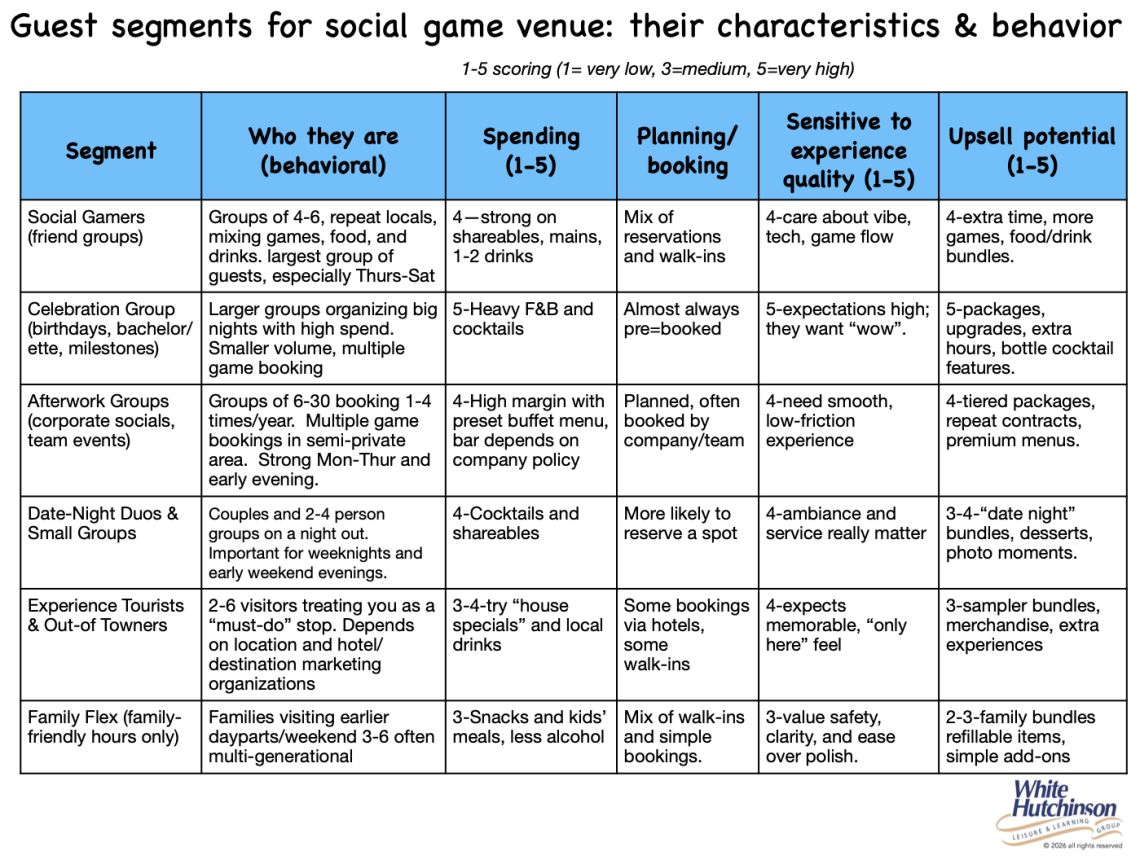
The following chart shows different segments, their traits, and behaviors for a typical social game eatertainment venue that features turn-taking, low-skill-variance social games like duckpin bowling and electronic darts, along with appealing food and drink options. (Turn-taking happens when each person takes a turn to play while others cheer, socialize, and enjoy food and drinks. "Low skill-level variance" means outcomes don't vary much between highly skilled and unskilled players, so most people have a similar chance to succeed or win.) To view the chart larger, you can download it as a PDF HERE.
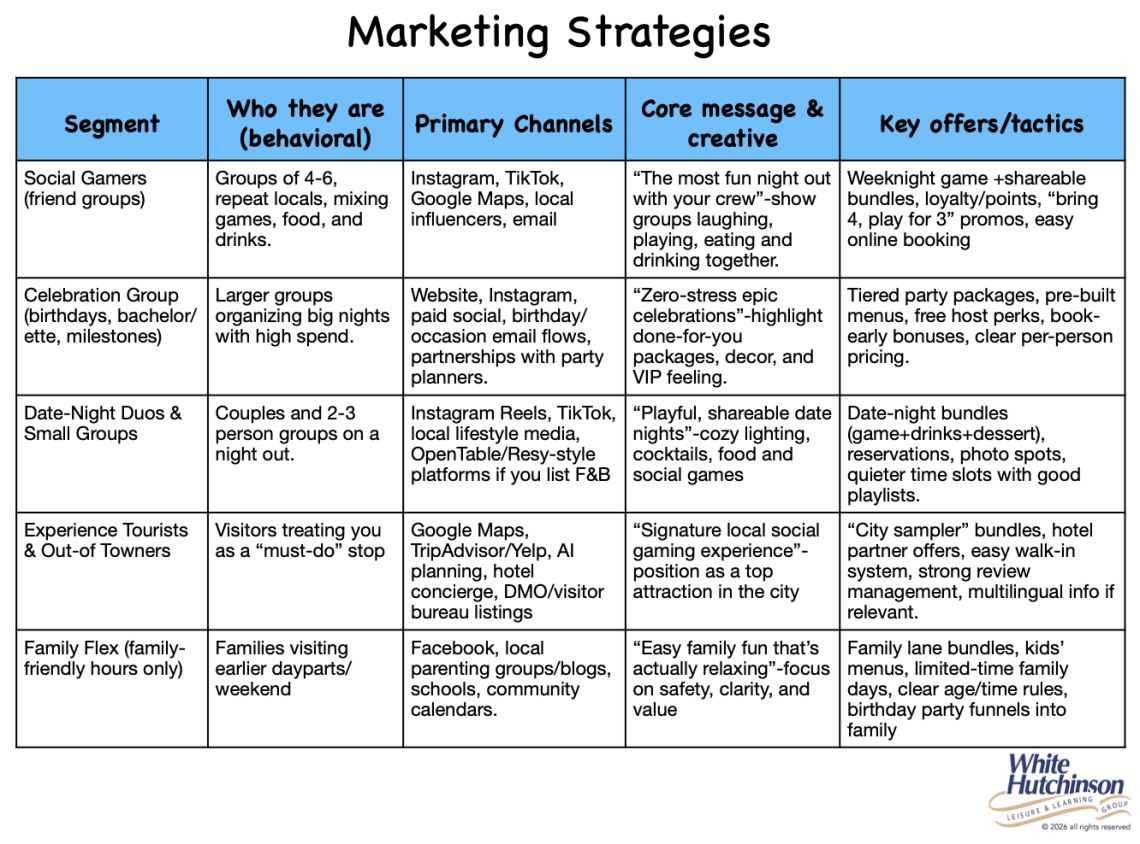
Here's a chart showing the marketing strategies for each segment. (To view it larger, you can download it as a PDF HERE)
Every type of location-based entertainment venue attracts different guest segments. The following example shows the guest segments for three different kinds of LBEs - a social game eatertainment venue, a typical family entertainment center (FEC), like Main Event, and Dave & Buster's. PDF is available HERE.
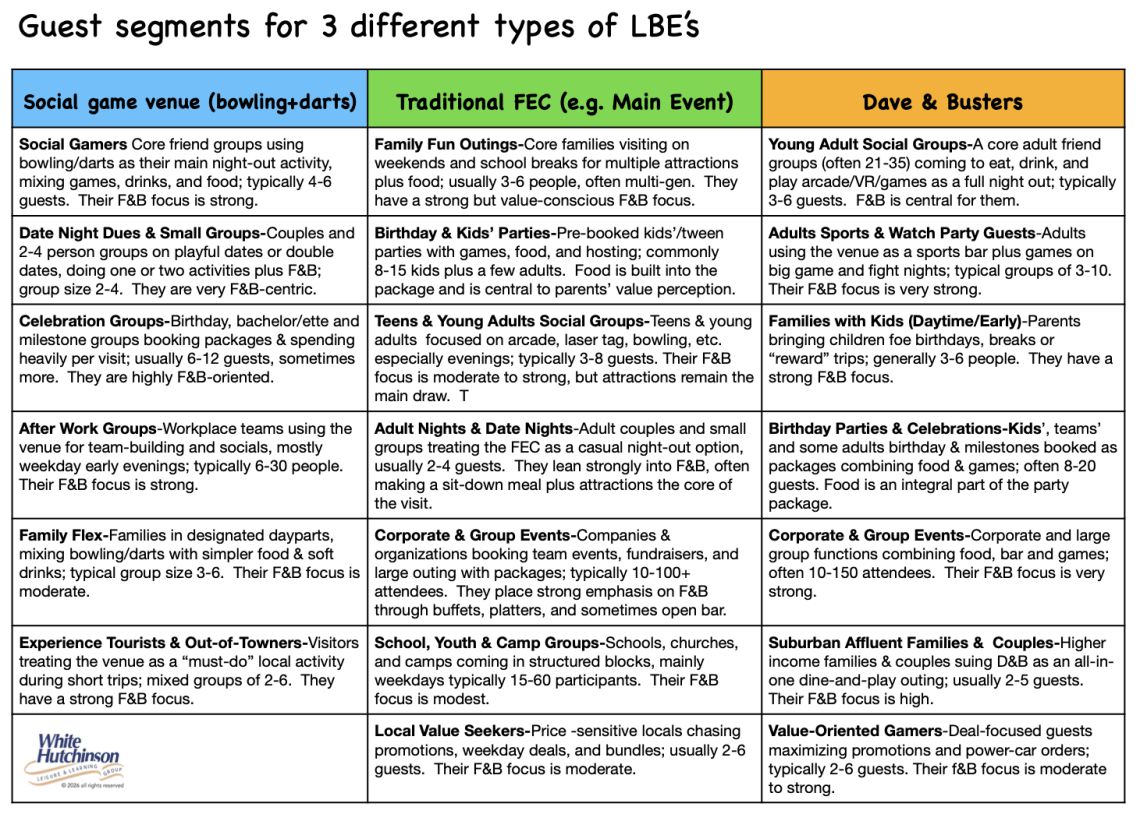
It's important not to categorize your guests by generation or age because not everyone in a group is the same, and people from different generations or ages can be similar. This article and its charts clearly show an effective way to classify LBE guest groups.
Subscribe to monthly Leisure eNewsletter
Vol. XXVI, No. 4, April 2026
- Editor's corner
- The IRL singles-events trend offers an opportunity for LBEs
- Popular beverage options at favorite restaurants
- Why are birthday parties declining?
- Using AI to generate LBE projections for roadkill
- Avoid dividing your guests by age or generation
- How the 'competitive socializing' LBE label is creating industry confusion