


Vol. XXVI, No. 4, April 2026
- Editor's corner
- The IRL singles-events trend offers an opportunity for LBEs
- Popular beverage options at favorite restaurants
- Why are birthday parties declining?
- Using AI to generate LBE projections for roadkill
- Avoid dividing your guests by age or generation
- How the 'competitive socializing' LBE label is creating industry confusion
The IRL singles-events trend offers an opportunity for LBEs
There is a clear trend in real-life (IRL) singles events, driven by dating-app fatigue, a desire for more authentic first impressions, and a demand for social formats focused on shared activities. Eventbrite reports that attendance at dating and singles events increased by 42% from 2022 to 2023. CBS News noted that more people are abandoning dating apps and seeking love in person, with some singles events attracting anywhere from 50 to 800 attendees.
Why is this happening?
Singles are responding to swipe fatigue, ghosting, and the feeling that app-based dating has become too transactional. Eventbrite's report shows that young singles favor face-to-face interactions and shared experiences, while media coverage highlights a broader shift back to in-person meetings, especially among Gen Z and Millennials.
A second reason is that IRL events reduce the social uncertainty of dating. Instead of wondering whether a match is serious, people attend the same event with the same goal, making the interaction feel more straightforward and effective.
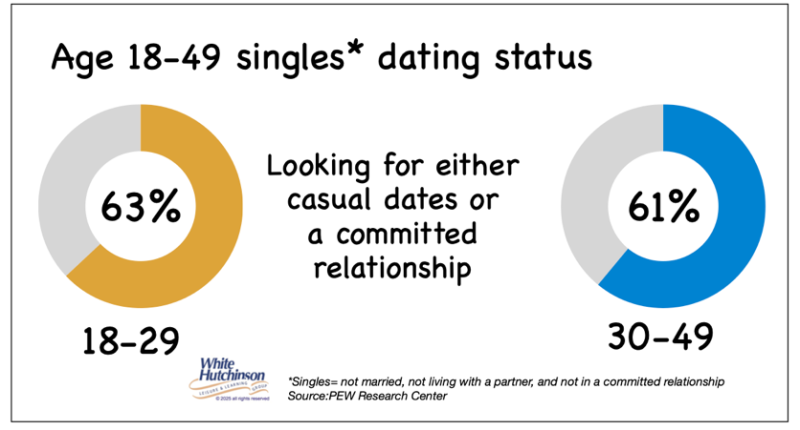
Dating is especially popular among younger singles who are not married, not living with a partner, and not in a committed romantic relationship. According to the PEW Research Center, most singles aged 18-29 (63%) and 30-49 (61%) are interested in either a committed relationship or casual dating. Nearly one-fifth (19%) of all adults aged 18-49, or 14 million people, are dating, making it a significant market to target.
Why it fits location-based entertainment venues
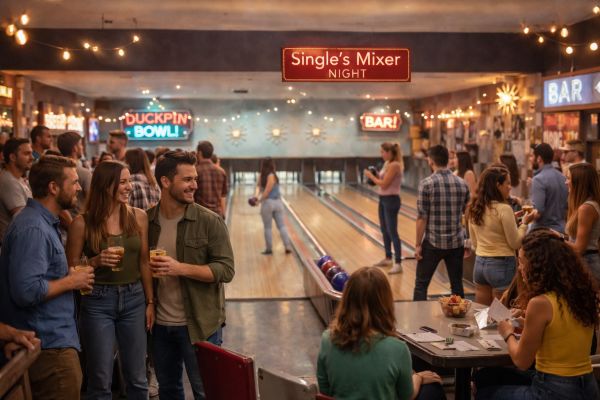
Location-based entertainment venues (LBEs), including many family entertainment centers (FECs), are particularly well-suited for this trend because they combine activities with a lively atmosphere. Singles events tend to do better when there's more to do than just stand around, and that's exactly what arcade, bowling, golf, karting, and social game eatertainment venues offer.
These venues also feature essential elements: private or semi-private spaces, food and drinks, hosts or event staff, and activities that naturally encourage conversation. This makes them perfect for speed dating, singles mixers, arcade nights, and play-based icebreakers.
A few examples:
- Dave & Buster's Mission Valley held a "Singles Arcade Night" featuring speed dating, games, and a host-led format, showing that a major LBE brand can support singles programming.
- Topgolf has hosted "Singles Night Out at TOPGOLF" and similar singles-focused events, demonstrating that the format works at golf-entertainment venues.
- Topgolf Glendale hosted a Christian singles mixer.
- Zone Bowling hosted a "Swap Lane Singles Night," which represents a typical singles event at a bowling center.
- Battle & Brew in Atlanta hosted a singles mixer in a game and dining environment.
- On Par Entertainment hosted a singles mixer, showing that a hybrid entertainment venue can be turned into a dating event space.
- Flight Club in Washington, DC, hosted "Dates & Darts Singles Social," which featured social darts, assigned groups, held two rounds of games, and rotated players to promote interaction, with an event host. It is an excellent example of a social game eatertainment venue.
What operators need to notice
The most successful formats usually go beyond just "open bar and hope for the best." The best examples include a host, clear start and end times, structured activities or icebreakers, and a venue experience that feels fun even if no one finds a match. This is important for LBEs because it means singles events can increase entertainment sales, food and beverage spending, and encourage repeat visits without turning into just a dating business.
The bigger opportunity is for singles events to become a recurring off-peak revenue stream or a regular daypart for venues that already have the right physical setup and brand personality. In other words, this isn't just a social trend; it's a profitable event format for entertainment venues.
Subscribe to monthly Leisure eNewsletter
Vol. XXVI, No. 4, April 2026
- Editor's corner
- The IRL singles-events trend offers an opportunity for LBEs
- Popular beverage options at favorite restaurants
- Why are birthday parties declining?
- Using AI to generate LBE projections for roadkill
- Avoid dividing your guests by age or generation
- How the 'competitive socializing' LBE label is creating industry confusion