


Vol. IV, No. 5, May 2026
Enhancing competitiveness & profit margins with transformative agritourism
For many farms, agritourism already brings people through the gate, but not always at the profit margins they'd like. The fastest-growing opportunity to boost attendance and higher-margin revenue isn't adding more attractions; it's redesigning what you already do so visitors leave changed, not just entertained. This article shows how shifting from purely “fun on the farm” to offering transformative experiences can help you increase the value of the visit, charge more, compete less on price, and attract more people.
Transformative experiences help people improve in one of four areas:
- Health and well-being (how you feel physically and emotionally).
- Wealth and prosperity (your work, finances, or sense of material security).
- Knowledge and wisdom (how you understand yourself, others, and the world).
- Purpose and meaning (your deeper values, direction, or sense of why you're here)
Why move beyond entertainment?
Traditional agritourism attractions - pumpkin patches, wagon rides, petting zoos, corn mazes, farm markets, u-pick, and other attractions - do a good job of driving attendance. At the same time, corn mazes, sunflower fields, u-pick, and similar agritainment staples are becoming commoditized as more farms offer the same activities, price competition intensifies, and margins shrink. Our company has conducted competitive analyses in many mid-size metro areas, where we found large numbers of fall festivals with pumpkin patches and corn mazes, all competing for customers. We found 18 in the Kansas City metropolitan area, which has a population of 2.2 million. To escape that trap, you need to move up the “progression of value-added agriculture,” from goods, services, and entertainment experiences to transformations, where customers pay more for a change in themselves, not just for time at your farm.
The shift toward transformations
This is part of a broader cultural shift. Analysts argue that we are entering a “transformation economy,” where people seek offerings that help them become healthier, more skilled, and more aligned with their values, rather than simply buying products or experiences. A 2025 Transformational Travel State of the Industry report finds that organizations delivering transformative experiences report 69% higher loyalty, underscoring that people increasingly value growth and meaning over simple enjoyment. Millennials and Gen Z, in particular, show a clear preference for spending on transformative experiences and are willing to pay more for them.
Adults with higher socioeconomic status, especially the college-educated, tend to be more engaged in lifelong learning and personal development and are also interested in these pursuits for their children. They are a natural market for transformational experiences on farms. A Pew Research Center survey found that 73% of adults consider themselves lifelong learners and that 87% of adults with at least a bachelor's degree participated in personal learning activities in the past year. They are highly motivated to seek transformative farm experiences.
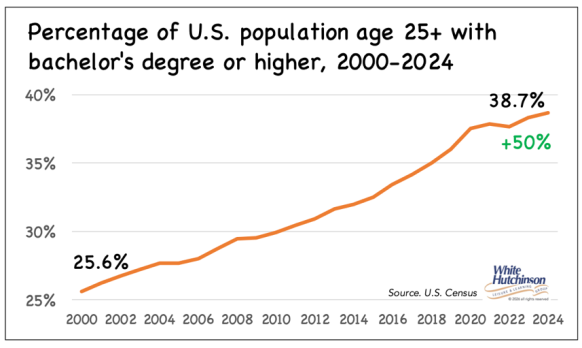
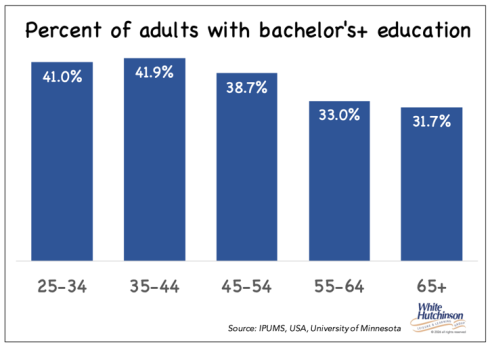
Households with a bachelor's degree or higher are a growing market. 38.9% of adults aged 25+ hold a degree, with the highest percentage among those aged 25-44. The percentage is forecast to continue to grow.
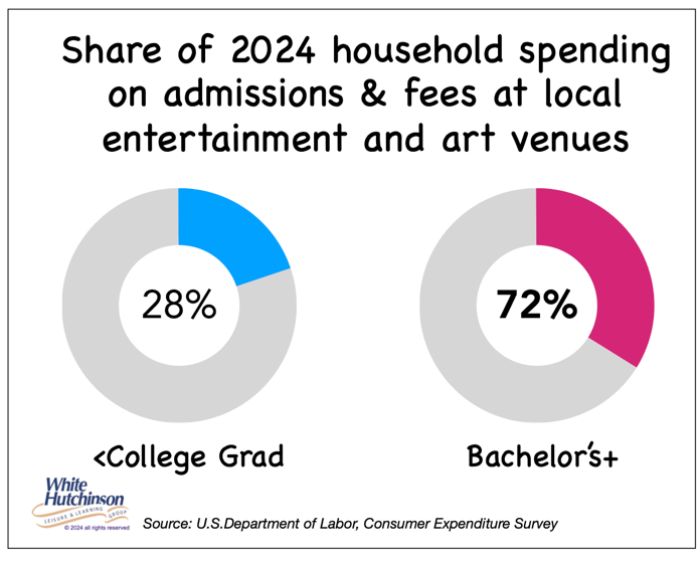
Households with a bachelor's degree account for 72% of all spending on fees and admissions to entertainment and arts venues, including agritourism farms.
Agritourism farms can directly tap into this demand by designing events that offer learning, reflection, and personal growth, rather than mere entertainment.
Why transformations mean higher profit margins
In the experience economy model, each step up the value-added agritourism ladder increases willingness to pay and reduces price sensitivity. A basic corn maze offers only generic fun. A guided, story-rich farm experience that changes how visitors think about food, water, and climate offers meaning and identity. A cooking class offers a lifelong skill and often promotes healthier eating. In our time-pressed culture, where discretionary leisure time is limited, transformative experiences are valued as time well invested rather than merely time well spent. As a result, guided, story-rich farm experiences and cooking classes command a premium price.
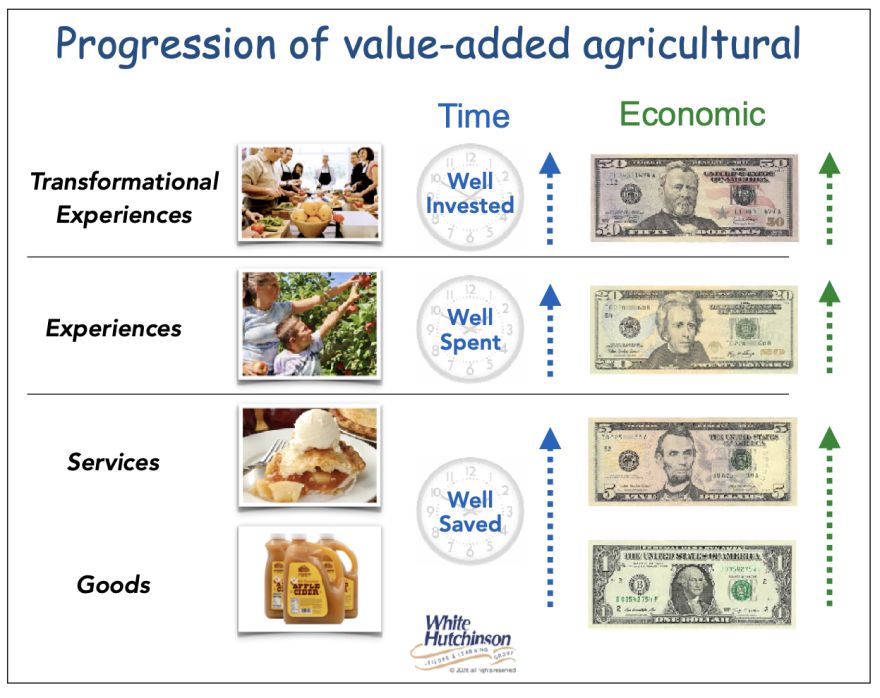
Guests pay for the chance to leave with new skills or a new perspective. These offerings are much harder for competitors to replicate. These experiences attract lifelong learners, typically higher-income visitors who already spend on cooking classes, wellness workshops, and cultural events, and who accept higher price points when they feel genuinely transformed by what you offer. This is how transformational agritourism becomes a strong profit center and a formula for sustainable growth.
Events with transformative experiences
Transformative agritourism builds on familiar formats - festivals, workshops, seasonal events - while adding skills, knowledge, or meaning. Hands-on crop and animal activities can include discussions of soil health, regenerative grazing, or integrated pest management, helping visitors connect everyday farm chores to global issues such as climate resilience and biodiversity. Skill-based workshops such as cheese-making, jam-making, fermentation, canning, or small-scale gardening equip guests with techniques they can use at home, turning a fun afternoon into long-term behavior change in cooking and food consumption.
Thematic events can go beyond watching. Harvest festivals, orchard days, or chili roasts may weave in stories about heritage varieties, Indigenous foodways, or regional water challenges, linking the pleasure of tasting to questions of culture and conservation. When farmers share their challenges and innovations, such as adopting drought-tolerant crops or transitioning to organic practices, visitors gain empathy and a sense of shared responsibility, both of which are central to a transformative experience.
During transformational events, guests might help pick fruit, watch or participate in pressing it into cider or cooking it into preserves, and then purchase finished products in the farm store that reflect the farm's story and values. This closes the loop between transformative experiences and consumption; visitors leave not only entertained but also equipped with new knowledge, a stronger emotional bond to producers, and tangible products that reinforce more intentional purchasing habits.
Farms that not only offer guests enjoyable experiences that create lasting memories but also elevate the visit by transforming guests and leaving them better in some way have a competitive advantage and higher profits.
To learn more about delivering transformational experiences, check out Joe Pine's recently published The Transformation Economy: Guiding Customers to Achieve Their Aspirations
Subscribe to Agritourism Today