


Vol. IV, No. 4, April 2026
- Editor's corner
- Master planning for farm markets that also host festivals
- How to increase your per-capita sales and improve your marketing
- Avoid dividing your guests by generation or age.
- Families vs. couples and singles: a new value equation
- How to Turn Your Agritourism Venue into a Must-Visit Experience
Families vs. couples and singles: a new value equation
Unsurprisingly, the family market continues to lead in the agritourism industry. Market studies and industry reports confirm that families with young children are the main visitors to most agritourism venues. They are drawn by the mix of educational and entertainment options for kids, along with the chance for the family to "unplug" and enjoy time away from home in a natural, wholesome, and authentic setting. Farms recognize this trend and offer many kid-friendly and kid-focused activities, such as petting zoos, hayrides, play areas, and u-pick.
Families visiting agritourism farms often gather in larger groups and spend more on activities such as farm experiences, food, and souvenirs. They tend to return regularly during times such as spring break, summer vacation, and fall festivals. Additionally, seasonal events like visits with Santa or the Easter Bunny can become yearly traditions that encourage repeat visits until the children grow up. That's the good news.
The bad news is that since 2007, births have been steadily declining. If you want to explore this trend further, check out last month's article on the topic HERE, but here's the summary. Preliminary birth data for 2025 shows a 700,000 (16%) decline in births compared to the peak in 2007 (3.6 million in 2025 vs 4.3 million in 2007). Rarely do we get a chance in any industry to look into the future, but birth data gives us a brief peek behind the curtain.
By 2025, there were 56.9 million children aged 0-14, the primary age group for agritourism venues, which is a 6% decrease since 2007. We estimate that by 2030, this number will decrease by 2.1 million children, or an additional 3.4% decline.
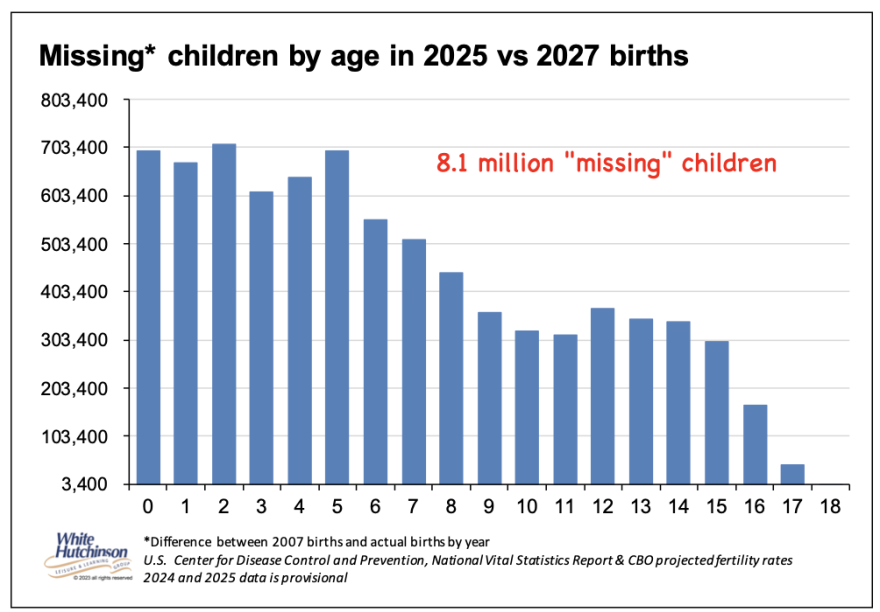
If we told you that by 2030, attendance will have decreased by nearly 10% since 2008, what would you do? Most likely, you'd start exploring other markets to target. If so, keep reading.
Young couples and singles market
Although families with children will always be a key part of family-focused agritourism, they don't have to be the only focus. Younger adult households (18-44) are declining in number, mainly because of decreasing birthrates. In 2007, households aged 18-44 with children 14 and under made up most of the households. Their numbers have decreased by 9% in 2024, while the number of young adult households has increased by 23%, now making them the largest group among all young adult households.
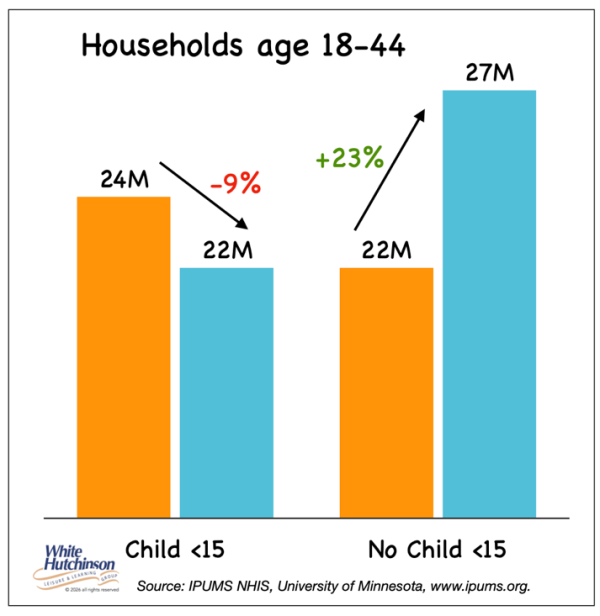
Additionally, many parents will go to adult-oriented events without their kids, broadening the adult market even further.
Our research has revealed a lot about what younger adult couples and singles (18-44) want, showing they are a key target market for agritourism venues. Providing appealing options for the young non-family market not only helps counteract declines caused by lower birth rates but also increases your overall attendance and revenue.
Younger adults, in particular, are turning to outdoor activities for entertainment and leisure, possibly to balance their digital native lifestyles, and data supports this.
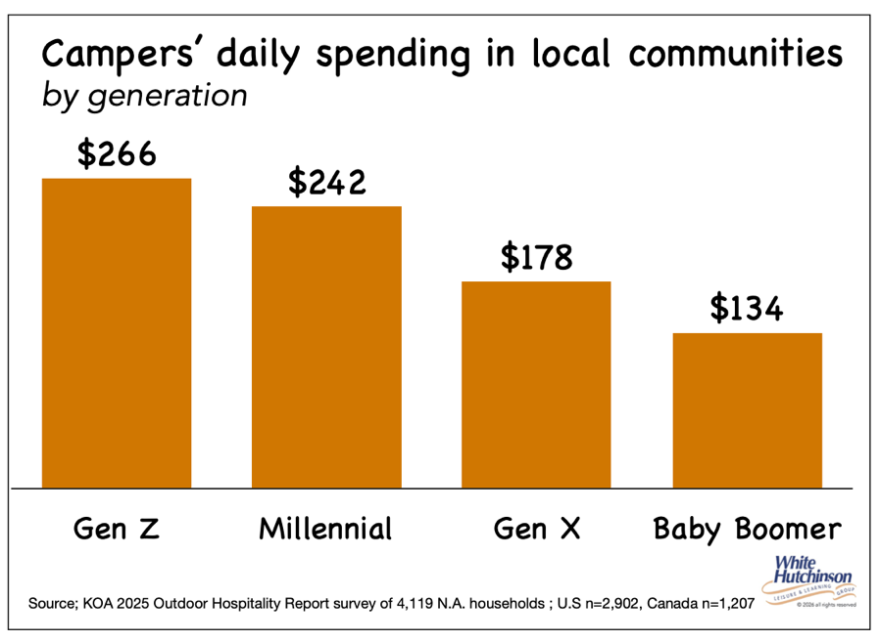
According to Kampgrounds of America's 2025 report, the youngest adults (18-44) accounted for 61% of new campers in 2024. Additionally, the youngest subgroup of 18-28-year-old campers (Gen Z) were the top daily spenders, averaging $266 per day, nearly double the $134 per day spent by Baby Boomers. Adults aged 29-44 spent almost as much as Gen Z, at $242 daily. The higher costs associated with their camping trips are intentional. The youngest group spends more on upgraded camping experiences by choosing more luxurious "glamping" sites over traditional RVs or tents, dining out more often, and investing in experiences and gear.
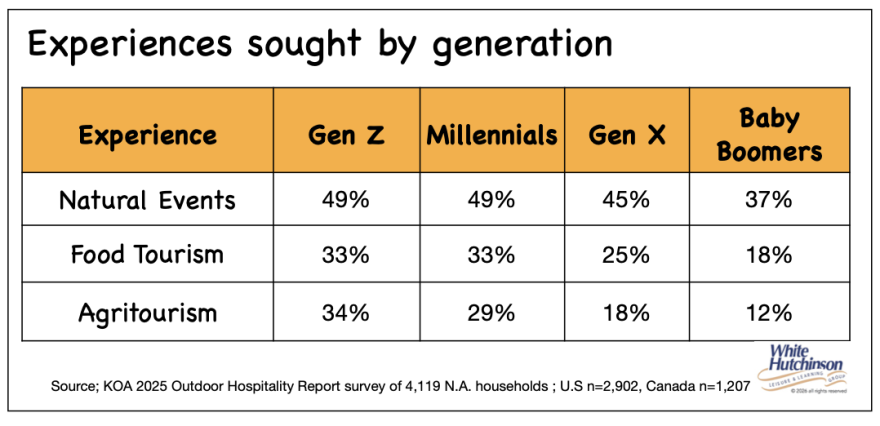
The same report lists the top experiences sought by campers by generation. For Gen Z, 34% are seeking agritourism experiences and 33% are interested in food tourism opportunities. The only experience more popular among this group was Natural Events. Millennials followed closely, with 29% looking for agritourism and 33% for food tourism. In comparison, only 12% of Baby Boomers pursue agritourism and 18% seek foodie tourism.
How to incorporate adult programming into an agritourism venue
So, the family market is steadily shrinking, while young adults are becoming increasingly interested in and willing to pay for premium agritourism experiences. How can a family-focused agritourism farm shift to include this eager, child-free demographic? Fortunately, both groups can be accommodated through proper timing and location management.
Families with children seek different activities and often prefer different times of day than those without children. This enables a smart venue to customize programming for both groups, making sure that young couples and singles don't feel the venue is too "kiddie," while families see it as suitable for their kids.
Families with children:
- Will mainly visit on weekends, during school breaks, and around holidays.
- Will participate in family-friendly activities such as U-pick, pumpkin patches, animal encounters or petting zoos, and kid-friendly festivals.
- Will freely roam in publicly accessible areas of your property.
- Buy general admission tickets for all-day activities.
- Will spend less per person on food and drinks than singles and couples, and will focus more on kid meals, snacks, and simple treats.
- They are price-conscious, preferring transparent upfront pricing over nickel-and-diming through add-ons or extra charges.
- Appeal to a bigger, seasonal customer base but make less profit per person.
Singles and couples:
- Will mainly visit during evenings and weekend nights.
- Will participate in activities such as farm-to-table dinners, wine, beer, and cheese tastings, workshops, classes, and wellness-focused or social events.
- Buy timed tickets for events that happen at scheduled times.
- They will often have their experience in parts of your property that aren't freely accessible to the public, such as a field used for a farm-to-table dinner or an office or kitchen space for classes.
- Will spend more per capita on food and beverages, including alcohol and non-alcoholic drinks, than families do, and will focus on high-quality, unique menu options and refined beverages, both alcoholic and non-alcoholic.
- They are willing to pay extra if the offering provides an experience that aligns with their tastes and values.
- Bring in fewer guests than families, but with higher profit margins.
Here's an example of how this might look for a farm in the fall:
Weekends:
- Provide traditional fall festival activities during the day.
Weekdays:
- During the day, replace periods of low attendance with field trips or larger classes that can utilize some public or non-public areas.
- Host a farm-to-table dinner at sunset in a picturesque outdoor setting.
For more great ideas on unique and adult-friendly activities, check out our March article on mashup events HERE.
While the advantages of higher attendance, mainly through increased revenue from programming, are obvious, there are also several hidden benefits. Adult programming can help prolong your season. Although family-friendly attractions are often seasonal, many activities for adults can be offered year-round, such as dinners, food and music festivals, classes, and workshops. This can also assist with staffing, as managing seasonal staffing for management-level positions can be challenging.
Encourage new demographics without alienating your old ones
Young families with children are an important demographic to keep engaged. Much of this can be achieved through the programming suggestions listed above, but don't forget other key considerations such as clean, family-friendly restrooms, stroller-accessible paths, clear wayfinding, and a website that is straightforward, easy to navigate, and friendly to AI scraper tools.
The bottom line
Both parents with their children and younger adults without children are key target audiences for agritourism venues. Understanding and catering to their preferences, along with offering activities that appeal to both groups, will help your agritourism business succeed in the future.
Subscribe to Agritourism Today
Vol. IV, No. 4, April 2026
- Editor's corner
- Master planning for farm markets that also host festivals
- How to increase your per-capita sales and improve your marketing
- Avoid dividing your guests by generation or age.
- Families vs. couples and singles: a new value equation
- How to Turn Your Agritourism Venue into a Must-Visit Experience