


Vol. III, No. 6, May 2025 (Special Edition)
Special Edition, May 2025
The FTC's new junk fee rule and how it affects agritourism events
So here is a math problem: How much will you pay if concert tickets cost $71 each and you need two concert tickets? If you answered $195.83, you are correct! If you said $142, I understand where you got confused. You must have used regular math and not live-event ticketing math. It is a simple mistake that many of us make. Determining the actual price of a live-event ticket is hard.
So how does $142 become $195.83? I looked up ticket prices for a Jonas Brothers concert at our local big concert venue, T-Mobile Center, and saw tickets available for $71. I clicked on the $71 tickets, selected two, and continued through the checkout process. The only pricing I saw until I entered payment information was $71x2. Then, as if by magic, the total appears $71 per ticket + $23.95 "service fee" per ticket + a single $5.95 mobile transfer fee.
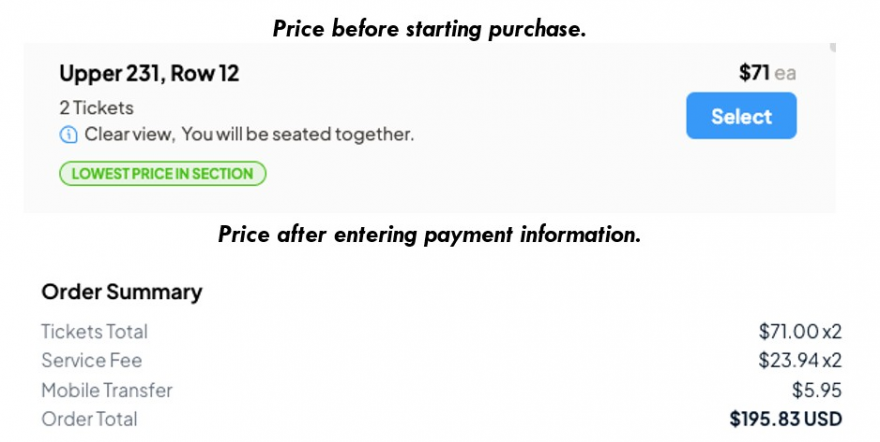
Let's look at those fees. The mobile service fee is for my delivery option of having the tickets delivered via text message. While relatively small, it is worth noting that this was the only delivery option given. And the almost $50 service fee? Even after searching the fine print, I couldn't find any information on what it is or how it is calculated. It just is. So, there you have a crash course in live-event ticketing mathematics.

Not a fan? Well, neither is the Federal Trade Commission (FTC). Eight days ago on May 12th, FTC's new Rule on Unfair or Deceptive Fees went into effect, targeting these hidden and often misleading "junk fees" in the live-event ticketing and short-term lodging industries; two of the biggest offenders of these practices, but also affecting other industries with ticketed events.
This is great news for concert goers, sports enthusiasts, and anyone renting on Airbnb, but how do the new rules affect agritourism businesses? These regulations affect you if you offer ticketed events at your farm or ranch, such as seasonal or food festivals, concerts, or even corn mazes. So today we will look at precisely what the FTC ruless mean, who they affect, and how to comply.
What are the Key Requirements?
- Total Price Disclosure: Businesses must clearly, conspicuously, and prominently display the total price, including all mandatory fees, taxes, shipping, and required add-ons, before asking consumers to pay.
- No Hidden or Surprise Fees: The rule prohibits bait-and-switch pricing tactics where mandatory fees are only revealed late in the transaction process. The total price must be displayed the first time the price is disclosed.
- Clarity on Fees: Companies must avoid vague terms like "convenience fees," "service fees," or "processing fees." They must clearly explain the purpose of any fee charged.
- Upfront Advertising: For hotels, vacation rentals, and ticketed events, all mandatory fees (such as resort, cleaning, or required parking fees) must be included in the advertised price, not just revealed at checkout.
- Optional Fees: Fees for optional goods or services that can be purchased at the same time may be disclosed later in the transaction, but must still be clear and not misleading.
- Credit Card Surcharges: Any surcharges must be included in the total price if paying by credit card is mandatory. If other payment methods are available that avoid the surcharge, they are considered optional and can be excluded from the total price.
Essentially, if an unavoidable fee is associated with the purchase, it must be included in the advertised purchase price and at the beginning of the purchase process. The only exceptions are taxes, shipping, and optional add-ons, which still have to be displayed but are allowed to appear later during the transaction.
Although these rules are relatively straightforward, there are still some restrictions under the new ruling that may not be as obvious, such as:
- Surcharges that are "optional" but don't offer any alternative option, such as the $5.95 mobile delivery fee I was being charged when my only delivery option was mobile delivery. This would also include a credit card fee if that was the only accepted means of payment.
- "Clear and conspicuous" pricing placement. The FTC requires the total purchase price to be "clearly and conspicuously" available to the customer. Their FAQ page gives a detailed explanation of this term with several examples, but the overall goal is to ensure that the total price is easy to find and difficult to miss. For instance, you can't prominently publish a price on your website that doesn't include fees and then list the total with fees in a less obvious way, such as in a smaller font or at the bottom of the page.
- "Optional" add-ons that are necessary for the advertised experience. For instance, if you sell tickets for a private bonfire, you can introduce add-ons like s'mores or hot dogs for a fee later on in the transaction, but not a fee for wood to make the fire. That would need to be included in the total published price at the beginning of the purchase process, as it is necessary for a bonfire experience.
Can mandatory fees be itemized?
Yes, you may itemize fees or charges for mandatory goods or services required to be included in the total price, but the total price must be clear, conspicuous, and most prominent. In addition, all itemizations must be truthful and not misrepresent fees, including what the fees are for.
Does this new regulation affect agritourism?
This regulation affects you if you sell tickets for activities at your agritourism venue. An event is considered a ticketed event subject to the rule if it includes all of the following elements:
- Ticketed admission - the event requires purchase for entry
- Time-bound occurrence - the event is held at a fixed date and location, and,
- Public accessibility - it is marketed to or open to the general public
Events subject to the new ruling would include ticketed admissions to:

- corn mazes,
- fall festivals
- food/beer/wine festivals
- concerts
- petting zoos
- pumpkin patches
- u-pick
- rodeos
- agricultural fairs and exhibitions
- farm tours, workshops, or classes
The rule would also apply to any short-term rentals on your property, such as
- Farm stays
- Vacation/HipCamp rentals
- Honeymoon suite rentals
The new rule does not apply to:
- Private events: Weddings, family reunions, corporate retreats, etc.
- Retail opportunities: Farm markets, produce stands, gift/souvenir shops.
- Non-ticketed events: Events such as festivals, u-pick, or pumpkin patches where admission is free and customers only pay for the items they pick, eat, or drink.
- Pre-recorded audio and visual performances and film screenings, such as a movie night at a farm.
Failure to comply: The FTC can pursue legal action against agritourism farms that violate the rule, including fines up to $51,744 and injunctions. State attorneys general may also file suits.
The bottom line
It is always best practice to provide easily accessible, accurate pricing for your guests. These new regulations will help ensure your guests have an enjoyable experience at your agritourism venue without confusion or frustration concerning pricing. If you want to learn more about the new regulations or if you are unsure if they affect you, the FTC has published an overview of the new ruling here and a list of common FAQs here.
Subscribe to Agritourism Today