This is a print-friendly version of www.whitehutchinson.com/news/lenews/2026/september/article104.shtml

[ Index of Previous eNewsletters (www.whitehutchinson.com/ news/ lenews/ previous.shtml) ]
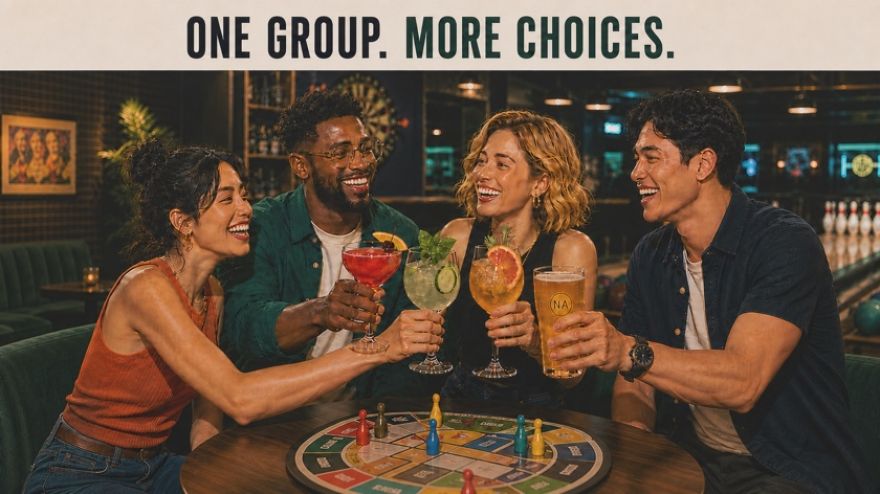
Location-based entertainment venues (LBEs) that continue to design their bars primarily for traditional alcohol drinkers are leaving attendance, revenue, and profit on the table. Without appealing choices, nondrinkers may reject the venue or settle for water, fountain soda, or another low-priced beverage that yields far less profit than a premium zero-proof drink. If moderating drinkers cannot find a satisfying alcohol-free option, the venue may lose a second or third beverage sale, and the group's visit may be shorter. The stakes are especially high among younger adults, including committed nondrinkers, occasional drinkers, and guests who are actively moderating their alcohol consumption.
A July 2026 Gallup survey found that alcohol consumption is on the decline, down from 65% ten years ago, with only a little over half of adults (54%) currently drinking. Younger adults show the greatest decline, with a 15 percentage-point drop for ages 18-34 to 50% and a 13 percentage-point drop for ages 35-54 to 58%.
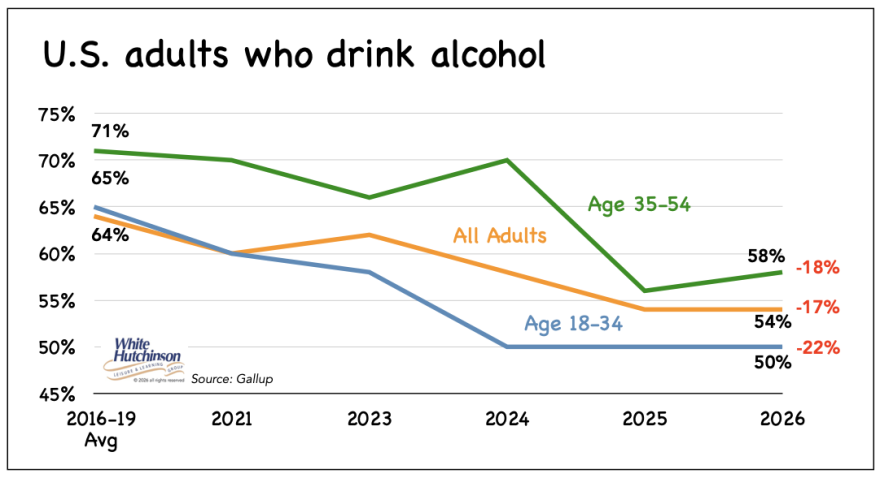
Not only is the percentage of drinkers at an all-time low, but drinkers are also drinking less. Among adults who drank alcohol in the past seven days, the average number of drinks has declined from 3.9 in 2016 to 3.2 in 2026.
Roughly two in ten drinkers consume alcohol less than once a month. Taken together, these figures indicate that approximately half of younger adults either do not drink or only drink infrequently. Meanwhile, NIQ reports (nielseniq.com/ global/ en/ insights/ analysis/ 2026/ from-value-to-vibe-how-moderation-preference-and-new-drinkers-are-reshaping-us-beverage-alcohol/ ) that 47% of U.S. on-premise customers practice “zebra-striping,” alternating alcoholic and nonalcoholic drinks during the same occasion to moderate their alcohol consumption. Together, these behaviors make the nonalcoholic beverage opportunity even greater than the alcoholic one among younger adults, the primary market for many LBEs, especially social entertainment concepts. A strong zero-proof program is therefore a profit opportunity, not simply an accommodation.
Capturing this opportunity requires more than a single canned NA beer or a sugary mocktail buried on the bottom of the menu. LBE operators should offer meaningful choices across flavor, style, occasion, and price, supported by alcohol-free beer and wine, premium sodas, functional beverages, and smaller-format, low-ABV, and zero-proof cocktails.
That breadth of options matters because an LBE visit is a shared social experience. Nondrinkers still want the flavor, presentation, ritual, and social visibility that come with ordering something special. When other group members order cocktails, they want the same chance to study the menu, choose something distinctive, and raise a glass. A thoughtfully crafted zero-proof drink can turn a free glass of water or a low-priced soda into a premium beverage purchase and make the guest feel included.
In that sense, a nondrinker can exercise the group's venue veto. Groups often choose destinations that accommodate everyone, not just the majority. A guest who expects to feel excluded can steer the entire party elsewhere, taking the group's admission, gaming, and food-and-beverage spending with them.
Beer programs should follow the same principle. An LBE with a substantial draft selection should include at least one alcohol-free tap. It should also offer several high-quality packaged NA beers in contrasting styles, such as a lager, an IPA, and a wheat beer, and serve them in appropriate glassware. An NA beer hidden in a refrigerator is not equivalent to a visible, promoted selection.
The opportunity extends beyond nondrinkers. Drinkers may replace a second or third alcoholic drink with a zero-proof cocktail, alcohol-free beer, or a premium soda, such as a dirty soda. Compelling NA alternatives can help lengthen visits, increase spending, and enhance the guest experience.
Some mocktails should serve as direct counterparts to popular cocktails. A guest might start with a traditional margarita, mule, or spritz and then order a zero-proof version that mirrors the original's flavor profile, glassware, garnish, and visual appeal. Menus can make moderation seamless by offering select drinks in both full-proof and zero-proof versions.
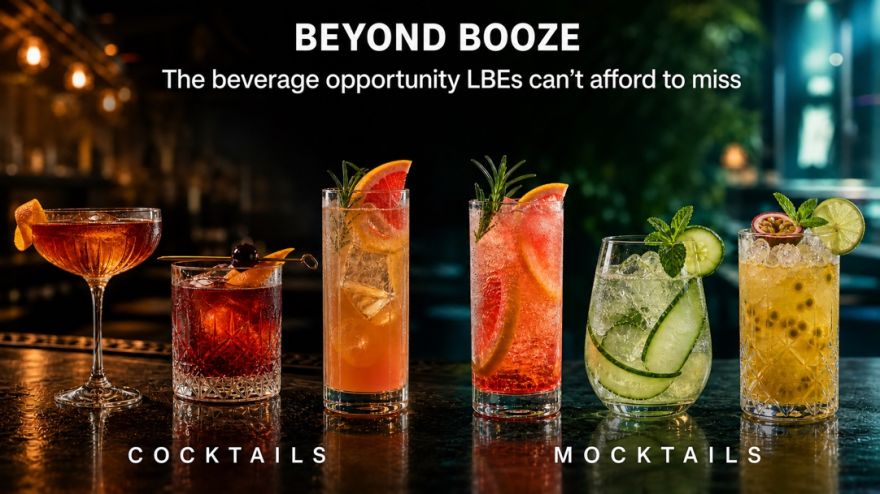
Paired drinks also streamline operations by sharing juices, syrups, mixers, garnishes, and preparation methods. Beyond those counterparts, the zero-proof menu should showcase original creations featuring teas, botanicals, spices, and functional ingredients.
The objective is experiential equality, not necessarily equal numbers of cocktails and mocktails. Zero-proof drinks deserve comparable variety, prominent placement, appealing names, balanced flavors, quality ingredients, adult glassware, thoughtful garnishes, and enthusiastic staff recommendations.
When every guest can participate in the social drinking experience, an LBE can attract more groups, trade guests up from low-priced beverages, secure additional drink orders, extend visits, and strengthen repeat business. The result is a more inclusive experience and a stronger bottom line.
Subscribe to monthly Leisure eNewsletter (www.whitehutchinson.com/ subscribe/ lenews/ )
[ Index of Previous eNewsletters (www.whitehutchinson.com/ news/ lenews/ previous.shtml) ]
© 1999 - 2026, White Hutchinson Leisure & Learning Group, Inc.
The contents of this website and eNewsletters are protected by USA and international copyright law. Permission is granted to download and print single copites of any of the contents or articles for personal use. No other copies may be made. Educational institutions may obtain permission to make multiple copies for classroom use by e-mailing us with details. The contents of articles may be quoted provided credit is given to the "(author's name), White Hutchinson Leisure & Learning Group, Kansas City, MO, USA". All other rights for use or reproduction of the contents and articles are reserved.