This is a print-friendly version of www.whitehutchinson.com/news/learnenews/2010/winter/article101.shtml

White Hutchinson Leisure & Learning Group, Kansas City, MO, USA
Vol. IX, No. 3, Sept-Dec 2010
- Compact Fluorescent Lights in Child Care (www.whitehutchinson.com/ news/ learnenews/ 2010/ winter/ article101.shtml#article)
- 2011 Institute on Creating Sustainable Environments for Young Children (www.whitehutchinson.com/ news/ learnenews/ 2010/ winter/ article102.shtml#article)
- The Challenge of Designing Environments for Children (www.whitehutchinson.com/ news/ learnenews/ 2010/ winter/ article103.shtml#article)
- See You at the Leadership Connections Conference in 2011 (www.whitehutchinson.com/ news/ learnenews/ 2010/ winter/ article104.shtml#article)
- Recent Projects (www.whitehutchinson.com/ news/ learnenews/ 2010/ winter/ article105.shtml#article)
[ Index of Previous eNewsletters (www.whitehutchinson.com/ news/ learnenews/ previous.shtml) ]
Compact Fluorescent Lights in Child Care
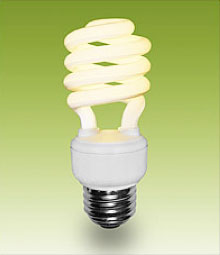 A compact fluorescent light (CFL) is designed to give as much light as a regular light bulb for less energy. Many child care centers have been changing out their incandescent light bulbs to this more energy savings bulb however no-one is explaining that like all fluorescent lamps, the new CFL’s contain mercury which complicates their disposal and can possibly harm children if a light bulb is broken and/or not disposed of properly.
Mercury is a powerful neurotoxin that can cause kidney and brain damage. It is especially dangerous because both the substance is toxic and the vapors discharged into the air. This is one of the reasons that thermometer manufacturers have eliminated mercury for years. It is also the reason dentists phased out mercury use in “silver” fillings.
The amount of mercury in each compact fluorescent bulb is tiny-about 5 milligrams or barely enough to cover the tips of a pen, however according to research performed at Stanford University, that is enough to contaminate up to 6,000 gallons of water beyond safe drinking levels. Obviously, that amount of mercury would be very damaging to a young child’s developing neurological system.
Below are the recommended procedures for the disposal of a compact fluorescent bulb.
Before cleanup: Vent the room
- Open a window and leave the room for 15 minutes or more.
- Shut off the central forced-air heating/air conditioning system, if you have one.
Cleanup steps for hard surfaces
- Carefully scoop up glass fragments and powder using stiff paper or cardboard and place them in a glass jar with metal lid (such as a canning jar) or in a sealed plastic bag.
- Use sticky tape, such as duct tape, to pick up any remaining small glass fragments and powder.
- Wipe the area clean with damp paper towels or disposable wet wipes and place them in the glass jar or plastic bag.
- Do not use a vacuum or broom to clean up the broken bulb on hard surfaces.
Cleanup steps for carpeting or rug
- Carefully pick up glass fragments and place them in a glass jar with metal lid (such as a canning jar) or in a sealed plastic bag.
- Use sticky tape, such as duct tape, to pick up any remaining small glass fragments and powder.
- If vacuuming is needed after all visible materials are removed, vacuum the area where the bulb was broken.
- Remove the vacuum bag (or empty and wipe the canister), and put the bag or vacuum debris in a sealed plastic bag.
Disposal of cleanup materials
- Immediately place all cleanup materials outside the building in a trash container or outdoor protected area for the next normal trash.
- Wash your hands after disposing of the jars or plastic bags containing cleanup materials.
- Check with your local or state government about disposal requirements in your specific area. Some states prohibit such trash disposal and require that broken and unbroken lamps be taken to a recycling center.
Future cleaning of carpeting or rug
- For at least the next few times you vacuum, shut off the central forced-air heating/air conditioning system and open a window prior to vacuuming. Immediately throw away the vacuum bag.
- Keep the central heating/air conditioning system shut off and the window open for at least 15 minutes after vacuuming is completed.
Source: U.S. Environmental Protection Agency
Additional information regarding clean up of the new energy efficient bulbs can also be found at www.lamprecycle.org, a one-stop place to find information about recycling all types of bulbs. This site can also help you find the nearest place to properly dispose of used compact fluorescent bulbs. In our community, Home Depot is the closest disposal site.
Vol. IX, No. 3, Sept-Dec 2010
- Compact Fluorescent Lights in Child Care (www.whitehutchinson.com/ news/ learnenews/ 2010/ winter/ article101.shtml#article)
- 2011 Institute on Creating Sustainable Environments for Young Children (www.whitehutchinson.com/ news/ learnenews/ 2010/ winter/ article102.shtml#article)
- The Challenge of Designing Environments for Children (www.whitehutchinson.com/ news/ learnenews/ 2010/ winter/ article103.shtml#article)
- See You at the Leadership Connections Conference in 2011 (www.whitehutchinson.com/ news/ learnenews/ 2010/ winter/ article104.shtml#article)
- Recent Projects (www.whitehutchinson.com/ news/ learnenews/ 2010/ winter/ article105.shtml#article)
[ Index of Previous eNewsletters (www.whitehutchinson.com/ news/ learnenews/ previous.shtml) ]
Mailing Address: White Hutchinson Leisure & Learning Group, 4036 Baltimore Avenue, Kansas City, Missouri 64111, USA
Telephone: +1.816.931-1040, Fax: +1.816.756-5058
E-mail: Please direct all messages for Leisure, Entertainment and Recreation Projects to Randy@whitehutchinson.com; and all messages for Children's Learning and Play Projects to Vicki@whitehutchinson.com.
© 1999 - 2026, White Hutchinson Leisure & Learning Group, Inc.
The contents of this website and eNewsletters are protected by USA and international copyright law. Permission is granted to download and print single copites of any of the contents or articles for personal use. No other copies may be made. Educational institutions may obtain permission to make multiple copies for classroom use by e-mailing us with details. The contents of articles may be quoted provided credit is given to the "(author's name), White Hutchinson Leisure & Learning Group, Kansas City, MO, USA". All other rights for use or reproduction of the contents and articles are reserved.