
This is a print-friendly version of www.whitehutchinson.com/news/agrinews/2023/june/article103.shtml

[ Index of Previous eNewsletters (www.whitehutchinson.com/ news/ agrinews/ previous.shtml) ]
A research study by Zoo Atlanta at their petting zoo found that the design of the animals' enclosures can reduce undesirable behavior by petting zoo animals.
Zoo Atlanta's goal for its petting zoo is for visitors to develop positive attitudes toward animals through one-to-one contact with them. Research shows that positive human-animal contact influences future attitudes toward animals. A positive experience at a petting zoo requires that animals tolerate contact and not have undesirable behaviors, including escape to avoid interaction with visitors. Undesirable behaviors can also include rearing, charging, foot stomping, head butting, head tossing, and sudden movements.
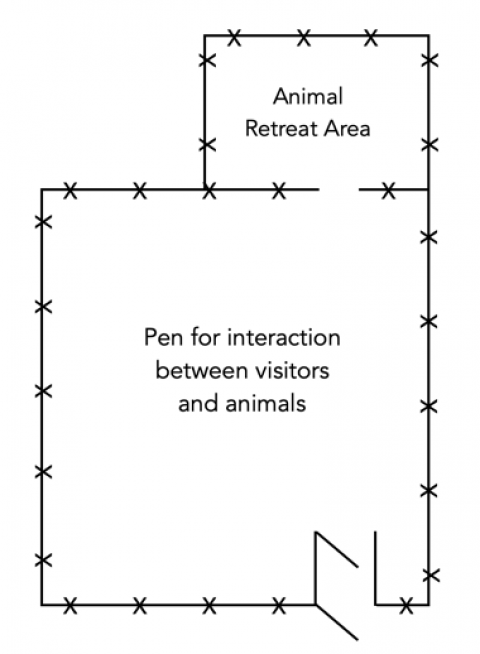
The research found that the higher visitor density or the more visitor touches occur in the animal enclosures, the higher the rate of undesirable behaviors. One explanation is that as human density increases, it becomes increasingly difficult for animals to maintain a comfortable territorial space resulting in aggressive or escape behaviors in attempts to gain control and restore their territorial area.
The research also found that undesirable behavior was significantly lower when petting zoo animals have a full-retreat space, a space they can escape to where they won't have any human interaction, even with people interacting with them through a fence. Giving animals control over some aspect of their environment is critical to their psychological well-being. Having a full-retreat space allows animals to control their interactions with humans.
The animals used in the study were African pygmy goats (Capra hircus) and Romanov sheep (Ovis aries). The study found that the Romanov sheep exhibited a higher rate of undesirable behavior than the pygmy goats, eleven times the undesirable behaviors per hour than the goats.
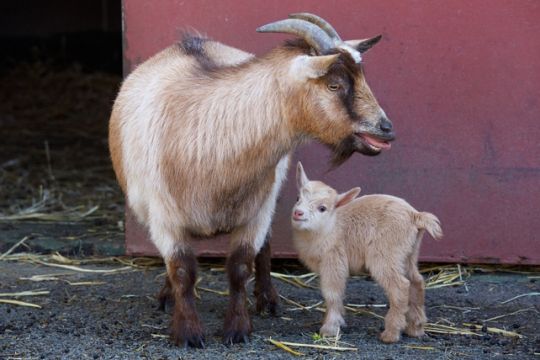 African pygmy goats |
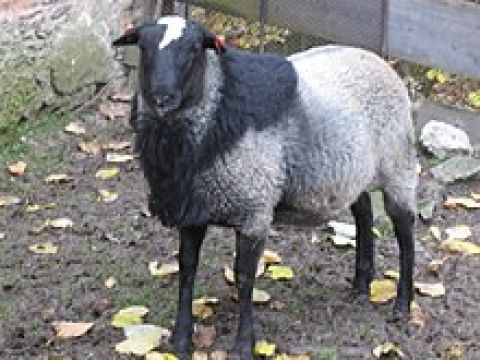 Romanov sheep |
The recommendations included that Romanov sheep may be questionable animals for petting zoos. Other research has found that Romanov sheep are fearful animals. On the contrary, the pygmy goats (and other breeds of goats) appeared to be a good choice. That might explain why a nationwide survey of petting zoo staff and visitors revealed that goats are the most popular petting zoo animal.
Controlling the density of visitors in animal petting pens and giving animals retreat areas where they can get away from human interaction will minimize undesirable animal behaviors and create the most positive petting zoo experiences for visitors. Be sure to have goats, the most popular petting zoo animal.
Source: Retreat Space and Human Visitor Density Moderate Undesirable Behavior in Petting Zoo Animals , Journal of Applied Animal Welfare Science 5(2), 125-137
Subscribe to Agritourism Today (www.whitehutchinson.com/ subscribe/ agrinews/ )
[ Index of Previous eNewsletters (www.whitehutchinson.com/ news/ agrinews/ previous.shtml) ]
© 1999 - 2026, White Hutchinson Leisure & Learning Group, Inc.
The contents of this website and eNewsletters are protected by USA and international copyright law. Permission is granted to download and print single copites of any of the contents or articles for personal use. No other copies may be made. Educational institutions may obtain permission to make multiple copies for classroom use by e-mailing us with details. The contents of articles may be quoted provided credit is given to the "(author's name), White Hutchinson Leisure & Learning Group, Kansas City, MO, USA". All other rights for use or reproduction of the contents and articles are reserved.